How to Cut Natural Stone Paving Slabs — Complete 2026 Expert Guide
Natural stone paving slabs remain a premium choice for patios, terraces and garden pathways thanks to their unique character, colour variation and long-term durability. Popular natural stone types include sandstone, limestone, granite, slate and basalt — each offering a different look and performance profile.
Unlike porcelain, which is vitrified and uniform, natural stone varies in density and structure. That means the best cutting method depends on the type of stone you’re working with and the tools you have available.
This guide covers everything you need to know about cutting natural stone paving slabs cleanly and professionally, including tool selection, blades, dust control, safety, and tips from experienced landscaping installers.
Types of Natural Stone and How They Cut
1. Sandstone
- Softer and easier to cut
- Works well with angle grinders or masonry saws
- Less prone to blade overheating
2. Limestone
- Denser than sandstone
- Requires higher-quality diamond blades
- Edges polish well for premium finishes
3. Granite
- Extremely dense and tough
- Best cut using bridge saws, table saws or wet saws
- Requires high-performance continuous rim blades
4. Slate
- Splits naturally along layers
- Risk of flaking or delaminating if rushed
- Wet cuts reduce vibration and chipping
Tools for Cutting Natural Stone Paving Slabs
Below are the best tools used by professional patio installers:
1. Angle Grinder (Most Common On-Site)
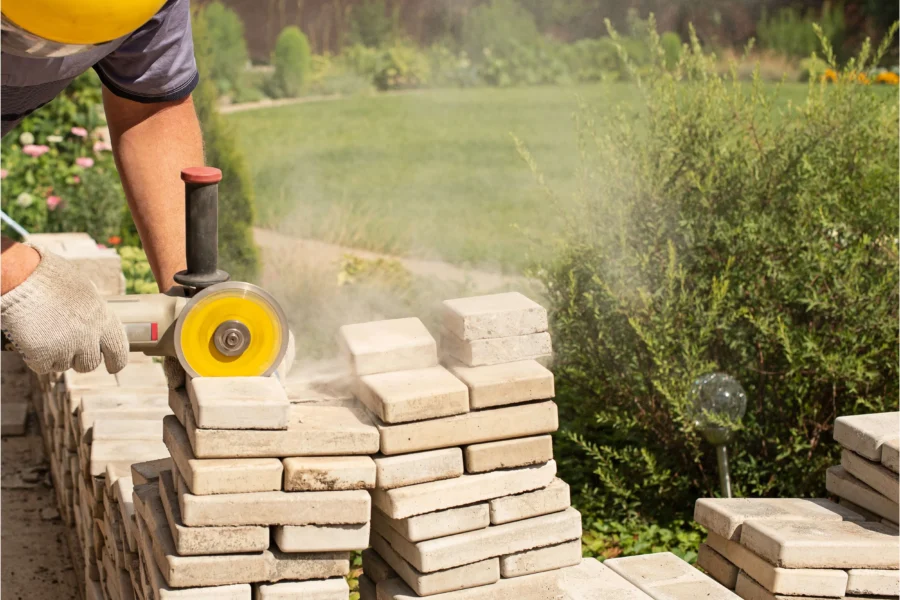
Fitted with a diamond segmented or turbo blade, an angle grinder is ideal for:
✔ trimming edges
✔ notching around features
✔ cutting curves
Segmented blades are acceptable for stone (unlike porcelain).
2. Masonry Saw / Stone Saw
These saws, often petrol-driven, are excellent for fast, straight cuts on thicker slabs. Ideal for:
✔ sandstone
✔ limestone
✔ granite
3. Wet Table Saw / Bridge Saw
Provides the cleanest finish and best control, especially for hard stone types like granite or basalt.
Benefits include:
✔ reduced dust
✔ cleaner edges
✔ fewer micro-fractures
4. Block Splitter (Manual or Hydraulic)
Block splitters are highly effective for sandstone. They offer:
✔ quick clean breaks
✔ rustic natural-looking edges
✔ zero silica dust during splitting
This is a popular method for traditional paving aesthetics.
Choosing the Right Blade for Natural Stone
Unlike porcelain, where continuous rim blades are mandatory, natural stone allows more blade variation:
Blade Types Suitable for Stone
✔ Segmented Rim Diamond Blades
✔ Turbo Diamond Blades
✔ Continuous Rim Blades (For fine finishing)
Wet vs Dry Cutting for Stone
Wet Cutting
✔ Reduces dust
✔ Increases blade life
✔ Cleaner edges
✔ Cooler cutting temperature
Dry Cutting
✔ Faster setup
✔ Good for site trimming
✘ Produces high levels of silica dust
✘ More blade wear
Recommendation: For granite, slate and dense limestone — always wet cut for best results.
Silica Dust Safety (Important)
Cutting stone releases respirable crystalline silica (RCS) dust. Pro installers use:
✔ Water suppression
✔ HEPA dust extraction
✔ FFP3 respirators
✔ Eye & ear protection
This is not just best practice — it’s a legal requirement on professional building sites in the UK.
How to Cut Natural Stone Step-by-Step
- Mark your cut line with chalk or pencil
- Support the slab to minimise vibration
- Use slow, steady feed speed
- Allow the blade to cut naturally (don’t force it)
- Cool the blade frequently (if dry cutting)
- Smooth the edge with an abrasive diamond pad (optional)
Finishing Options for Stone Edges
Installers may choose to:
✔ chamfer the edge
✔ smooth it with diamond pads
✔ Leave it split for a rustic finish
✔ polish (granite/limestone)
Polished edges are common for step treads or feature pieces.